ChatGPT Prompts for Dietitians: Practical AI Help for Meal Planning, Client Communication, and Nutrition Content
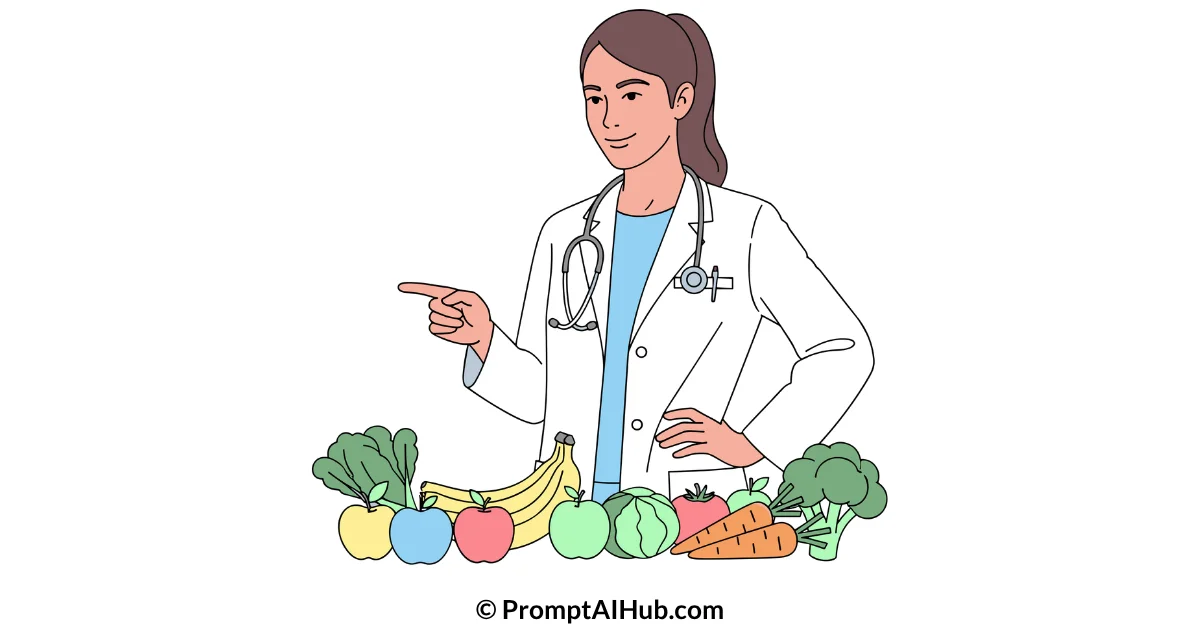
Dietitians often handle a mix of responsibilities that go far beyond discussing food. Meal-planning ideas, client education, nutrition resources, follow-up communication, content creation, and administrative tasks can all compete for attention.
ChatGPT can help speed up parts of that work when used carefully. The key is giving it enough context and using it as a drafting and brainstorming assistant—not as a replacement for professional judgment, individualized assessment, or clinical decision-making.
The following prompts are designed around practical tasks a dietitian may encounter. Customize the details in brackets before using them, and review every output for accuracy, appropriateness, and alignment with your professional standards.
Table of Contents
How Dietitians Can Use These ChatGPT Prompts
For better results, include relevant details such as:
- The client’s general goals
- Dietary preferences or restrictions
- Relevant non-sensitive context you are comfortable sharing
- The intended audience
- Desired tone and reading level
- The format you need
- Any professional or evidence-based requirements
Avoid entering personally identifiable or confidential client information unless you have an appropriate, secure workflow and permission to do so.
ChatGPT Prompts for Dietitians
Meal Planning and Nutrition Education Prompts
Prompt 1: Create a Meal Planning Framework
READY-TO-USE PROMPT
Act as an assistant helping a registered dietitian organize a meal-planning framework. Create a [NUMBER]-day meal plan structure for a client whose goal is [GOAL]. Consider these dietary preferences or restrictions: [DETAILS]. Do not present this as individualized medical advice. Organize the response into breakfast, lunch, dinner, and optional snacks. Include practical meal ideas, ingredient variety, and a simple shopping list. Clearly identify any areas that require review by the dietitian.

Prompt 2: Generate Balanced Meal Ideas
READY-TO-USE PROMPT
Generate [NUMBER] practical meal ideas for someone following these preferences: [DIETARY PREFERENCES]. The goal is [GOAL]. For each idea, include the meal name, main ingredients, a brief preparation description, and possible substitutions. Keep the suggestions realistic for [BUDGET, COOKING SKILL, OR TIME AVAILABLE]. Do not make unsupported health claims.
Prompt 3: Turn Nutrition Advice Into Client-Friendly Language
READY-TO-USE PROMPT
Rewrite the following nutrition guidance in clear, supportive, client-friendly language at approximately a [READING LEVEL] reading level. Preserve the original meaning and avoid changing any professional recommendations. Use short paragraphs and practical examples where helpful. Here is the guidance: [PASTE TEXT].
Prompt 4: Create a Weekly Meal Preparation Plan
READY-TO-USE PROMPT
Help me organize a weekly meal-preparation plan based on these meals or ingredients: [LIST]. Group the preparation tasks into steps that can be completed in advance. Create a practical schedule for [NUMBER] preparation sessions during the week. Include storage and reheating considerations only when appropriate, and flag anything that should be reviewed for food-safety accuracy.
Prompt 5: Generate Ingredient Substitution Ideas
READY-TO-USE PROMPT
Suggest practical ingredient substitutions for the following ingredient: [INGREDIENT]. The substitutions should consider [ALLERGIES, DIETARY PREFERENCE, AVAILABILITY, BUDGET, OR OTHER FACTORS]. Explain briefly how each substitution may affect taste, texture, or cooking. Do not assume that a substitute is nutritionally equivalent unless that can be supported.
Prompt 6: Create a Grocery List From a Meal Plan
READY-TO-USE PROMPT
Turn the following meal plan into an organized grocery list: [PASTE MEAL PLAN]. Combine duplicate ingredients and group the final list into logical categories such as produce, proteins, grains, dairy or alternatives, pantry items, and other relevant categories. Keep quantities separate where the information is available. Do not invent quantities that were not provided.
Prompts for Client Education Materials
Prompt 7: Create a Nutrition Handout Outline
READY-TO-USE PROMPT
Create a clear outline for a client education handout about [TOPIC]. The audience is [AUDIENCE], and the reading level should be [LEVEL]. Include the most important concepts, practical examples, and suggested questions the client can discuss with their dietitian. Avoid unsupported claims and clearly separate general education from individualized advice.
Prompt 8: Simplify a Complex Nutrition Topic
READY-TO-USE PROMPT
Explain [NUTRITION TOPIC] in simple, accurate language for [TARGET AUDIENCE]. Use an easy-to-follow structure with a short introduction, key points, and practical everyday examples. Avoid oversimplifying scientific information to the point of making it inaccurate.
Prompt 9: Create Frequently Asked Questions
READY-TO-USE PROMPT
Create [NUMBER] frequently asked questions and concise answers about [TOPIC] for a dietitian’s educational resource. The answers should be informative, easy to understand, and appropriately cautious. Do not invent scientific evidence, statistics, or health claims. Flag questions that require individualized professional advice.
Prompt 10: Develop a Food Label Learning Exercise
READY-TO-USE PROMPT
Create an educational exercise that teaches [AUDIENCE] how to understand a food label. Include a fictional example label, [NUMBER] discussion questions, and an answer guide. Focus on general nutrition education and avoid presenting the exercise as individualized dietary advice.
Prompt 11: Create a Workshop Activity
READY-TO-USE PROMPT
Design an interactive nutrition education activity for a [DURATION]-minute session about [TOPIC]. The audience is [AUDIENCE]. Include the objective, materials needed, step-by-step instructions, discussion questions, and a short takeaway. Keep the activity practical and appropriate for the audience’s knowledge level.
Prompt 12: Build a Myth-versus-Fact Draft
READY-TO-USE PROMPT
Help me draft a nutrition myth-versus-fact resource about [TOPIC]. List common claims people may encounter, then provide a cautious, evidence-aware explanation of each one. Do not invent studies or citations. Mark any statement that requires verification before publication.
Prompts for Client Communication and Follow-Ups
Prompt 13: Draft a Professional Follow-Up Email
READY-TO-USE PROMPT
Draft a warm, professional follow-up email from a dietitian to a client after an appointment. The purpose is to summarize these agreed next steps: [LIST]. Use a supportive tone without making new recommendations beyond the information provided. Keep the email concise and easy to scan.
You can also explore these ChatGPT prompts for email writing for additional professional communication ideas.
Prompt 14: Create a Session Summary Template
READY-TO-USE PROMPT
Create a reusable session summary template for a dietitian. Include sections for goals discussed, key topics, agreed actions, questions for follow-up, and any educational resources shared. Keep the template general and adaptable to different clients.
Prompt 15: Rewrite a Message With a Supportive Tone
READY-TO-USE PROMPT
Rewrite the following message so it sounds supportive, respectful, and nonjudgmental while preserving its original meaning: [PASTE MESSAGE]. Avoid language that could sound shaming, overly prescriptive, or dismissive.
Prompt 16: Create a Reminder Message
READY-TO-USE PROMPT
Write a short, friendly reminder message for a client about [APPOINTMENT, FOOD LOG, FOLLOW-UP TASK, OR OTHER PURPOSE]. The tone should be professional and encouraging. Keep it under [NUMBER] words and avoid including confidential information.
Prompt 17: Prepare Discussion Questions for a Follow-Up
READY-TO-USE PROMPT
Generate thoughtful, open-ended questions a dietitian could consider asking during a follow-up appointment related to [GENERAL TOPIC OR GOAL]. Focus on understanding progress, barriers, preferences, and what support may be helpful. Avoid assuming the client’s experience or giving conclusions before an assessment.
Prompt 18: Turn Notes Into an Action List
READY-TO-USE PROMPT
Convert the following non-confidential session notes into a clear action list containing: agreed next steps, resources to share, questions to revisit, and administrative follow-ups. Do not add information that is not present in the notes. Here are the notes: [PASTE NOTES].
For related healthcare communication and organization ideas, see these ChatGPT prompts for nurses.
Dietitians can also explore broader ChatGPT prompts for professionals for general productivity and workflow support.
Prompts for Nutrition Assessments and Planning
Prompt 19: Organize General Assessment Information
READY-TO-USE PROMPT
Help me organize the following non-identifiable nutrition assessment information into clear categories for professional review: [PASTE INFORMATION]. Group the details under relevant headings such as goals, dietary patterns, food preferences, lifestyle factors, reported challenges, and questions for further assessment. Do not diagnose, make treatment decisions, or invent missing information.
Prompt 20: Identify Questions for Further Assessment
READY-TO-USE PROMPT
Based on this general client scenario: [PASTE NON-IDENTIFIABLE DETAILS], generate a list of open-ended questions that a dietitian may consider exploring during an assessment. Focus on gathering additional context rather than making assumptions or recommendations. Organize the questions into logical categories.
Prompt 21: Create a Goal-Setting Framework
READY-TO-USE PROMPT
Create a practical goal-setting framework for a dietitian working with a client on [GENERAL GOAL]. Include space for the client’s priorities, current situation, potential barriers, available support, small next steps, and ways to review progress. Keep the framework adaptable rather than prescriptive.
Prompt 22: Turn Broad Goals Into Smaller Actions
READY-TO-USE PROMPT
Help me break this broad nutrition or lifestyle goal into smaller, realistic actions: [GOAL]. Generate several possible approaches that can be discussed and personalized with the client. Include potential barriers and questions a dietitian could use to help determine which approach fits the individual.
Prompt 23: Create a Progress Review Template
READY-TO-USE PROMPT
Create a reusable progress review template for nutrition follow-up sessions. Include sections for what has changed, what went well, challenges encountered, changes in priorities, questions to explore, and possible next steps. Keep the language supportive and nonjudgmental.
Prompt 24: Compare Meal Pattern Options
READY-TO-USE PROMPT
Create a neutral comparison of these meal pattern options: [OPTION 1], [OPTION 2], and [OPTION 3]. Compare practical factors such as planning requirements, food variety, flexibility, preparation time, and potential considerations. Do not claim that one option is universally better.
Prompts for Recipe Development and Food Ideas
Prompt 25: Generate Recipe Ideas From Available Ingredients
READY-TO-USE PROMPT
Suggest [NUMBER] recipe ideas using these ingredients: [LIST INGREDIENTS]. Consider these preferences or restrictions: [DETAILS]. For each recipe, include the main ingredients, basic preparation steps, estimated preparation complexity, and possible substitutions. Avoid inventing precise nutrition information unless sufficient data is provided.
Those working heavily with recipes and food preparation may also find these ChatGPT prompts for chefs useful.
Prompt 26: Adapt a Recipe for Specific Preferences
READY-TO-USE PROMPT
Adapt the following recipe for someone with these dietary preferences or restrictions: [DETAILS]. Preserve the general purpose and flavor profile where possible. Explain which ingredients are being changed and why, and identify any substitutions that may need professional review for individual suitability. Here is the original recipe: [PASTE RECIPE].
Prompt 27: Create Quick Meal Ideas for Busy Schedules
READY-TO-USE PROMPT
Generate practical meal ideas for someone with limited cooking time. The available preparation time is approximately [TIME], the cooking skill level is [LEVEL], and the preferences are [DETAILS]. Provide a variety of options using realistic ingredients and simple preparation methods.
Prompt 28: Build a Leftovers Strategy
READY-TO-USE PROMPT
Create a practical plan for using leftovers from the following meals or ingredients: [LIST]. Suggest ways to repurpose them into new meals while reducing unnecessary food waste. Keep the ideas realistic and flag any food-safety considerations that should be verified.
Prompt 29: Create Budget-Conscious Meal Ideas
READY-TO-USE PROMPT
Generate [NUMBER] budget-conscious meal ideas based on these preferences: [DETAILS]. Prioritize commonly available ingredients, flexible recipes, and ways to reuse ingredients across multiple meals. Do not assume food prices are the same in every location.
Prompt 30: Create a Seasonal Food Content List
READY-TO-USE PROMPT
Generate ideas for nutrition-related content based on foods commonly available during [SEASON] in [LOCATION]. Suggest educational topics, recipe concepts, shopping tips, and meal ideas. Clearly separate general content ideas from location-specific claims that require verification.
Similar AI-assisted workflows can also be useful across healthcare professions, including ChatGPT prompts for doctors.
Prompts for Nutrition Content and Blog Writing
Prompt 31: Create Blog Topic Ideas
READY-TO-USE PROMPT
Generate [NUMBER] useful blog topic ideas for a dietitian whose audience is [TARGET AUDIENCE]. The main areas of interest include [TOPICS]. Focus on specific questions, practical challenges, and educational needs the audience may have. Avoid generic topics that could apply equally to every health or wellness website.
Prompt 32: Create a Nutrition Article Outline
READY-TO-USE PROMPT
Create a detailed, reader-friendly outline for an article about [TOPIC]. The target audience is [AUDIENCE], and the purpose is [EDUCATE, EXPLAIN, OR OTHER GOAL]. Organize the outline around the questions readers are likely to have. Avoid adding unsupported claims or sections simply to increase length.
Prompt 33: Write a Clear Introduction
READY-TO-USE PROMPT
Write three different introduction options for an article about [TOPIC]. The target audience is [AUDIENCE]. Each introduction should establish why the topic matters and lead naturally into the article without using exaggerated claims, unnecessary statistics, or generic opening phrases.
Prompt 34: Simplify Existing Nutrition Content
READY-TO-USE PROMPT
Rewrite the following nutrition content for [TARGET AUDIENCE]. Make the language clearer, more engaging, and easier to understand while preserving the original meaning. Do not add new scientific claims or alter recommendations. Here is the original content: [PASTE TEXT].
Prompt 35: Create Practical Examples
READY-TO-USE PROMPT
Based on this educational content about [TOPIC], create [NUMBER] realistic examples that help readers understand how the concept might apply in everyday situations. Keep the examples general and illustrative rather than presenting them as individualized recommendations.
Prompt 36: Generate a Content Series
READY-TO-USE PROMPT
Plan a [NUMBER]-part educational content series about [TOPIC] for [TARGET AUDIENCE]. Give each piece a distinct purpose and angle. Arrange the topics in a logical sequence so the audience can build understanding over time without repeating the same information.
Dietitians who also publish food-focused content can get additional ideas from these ChatGPT prompts for food bloggers.
Prompts for Social Media and Audience Education
Prompt 37: Create Educational Social Posts
READY-TO-USE PROMPT
Create [NUMBER] social media post ideas about [TOPIC] for a dietitian. The target audience is [AUDIENCE], and the platform is [PLATFORM]. Each idea should include a hook, the main educational point, and a suggested call to action. Keep the information accurate and avoid sensational health claims.
For more social media writing ideas, see these ChatGPT prompts for Instagram posts and captions.
Prompt 38: Turn One Topic Into Multiple Formats
READY-TO-USE PROMPT
Take this nutrition topic: [TOPIC] and adapt it into content for a blog post, Instagram carousel, short video, email newsletter, and simple client handout. Give each format a distinct angle while keeping the core information consistent.
Prompt 39: Create an Instagram Carousel Outline
READY-TO-USE PROMPT
Create a slide-by-slide outline for an Instagram carousel about [TOPIC]. The target audience is [AUDIENCE]. Start with a clear hook, develop the idea across the slides, and finish with a relevant call to action. Keep each slide concise and avoid oversimplifying important nutrition information.
Prompt 40: Write Short Video Scripts
READY-TO-USE PROMPT
Write [NUMBER] short video script ideas about [TOPIC] for a dietitian’s social media account. Each script should include a strong opening, one clear educational message, and a natural ending. Keep the tone [FRIENDLY, PROFESSIONAL, CONVERSATIONAL, OR OTHER].
Prompt 41: Create Myth-Checking Social Content
READY-TO-USE PROMPT
Create a social media post that examines this nutrition claim: [CLAIM]. Structure it with a clear hook, a balanced explanation, and practical context. Do not present uncertain information as fact, and identify any claims that should be verified before publication.
Prompt 42: Generate Audience Questions
READY-TO-USE PROMPT
Generate realistic questions that [TARGET AUDIENCE] may ask about [TOPIC]. Group them by beginner, intermediate, and more detailed questions. Use these questions to identify useful opportunities for future educational content, FAQs, or discussion topics.
Prompts for Nutrition Practice Organization
Prompt 43: Organize a Daily Workload
READY-TO-USE PROMPT
Help me organize my workload as a dietitian for [DAY OR WEEK]. My tasks include [LIST TASKS]. Group them by urgency, estimated effort, and whether they require focused work or can be completed quickly. Create a realistic order of work without assuming that every task has the same priority.
Prompt 44: Create a Weekly Content and Client Workflow
READY-TO-USE PROMPT
Build a practical weekly workflow for a dietitian who needs to balance client-related tasks, content creation, administrative work, professional development, and preparation. My available working hours are [HOURS]. My recurring responsibilities are [LIST]. Organize the workflow around realistic blocks of focused work and leave reasonable flexibility for unexpected tasks.
Prompt 45: Turn a Task List Into a Schedule
READY-TO-USE PROMPT
Turn this task list into a practical schedule: [TASK LIST]. My available working hours are [HOURS], and these tasks have the following deadlines or priorities: [DETAILS]. Group similar tasks together where useful and identify anything that may need additional time or clarification.
Prompt 46: Create a Reusable Workflow
READY-TO-USE PROMPT
Design a repeatable workflow for handling [TASK, SUCH AS CLIENT EDUCATION, CONTENT CREATION, OR MEAL-PLAN PREPARATION]. Break it into clear stages from preparation to final review. Include quality-control checkpoints and identify where professional judgment is required.
Prompt 47: Create an Administrative Checklist
READY-TO-USE PROMPT
Create a reusable checklist for the administrative side of [TASK OR PROCESS]. Include preparation, completion, documentation, follow-up, and review steps. Keep it general enough to adapt to my practice and do not assume specific legal, regulatory, or organizational requirements.
Prompt 48: Identify Repetitive Tasks
READY-TO-USE PROMPT
Review this list of recurring tasks performed in a dietitian’s workflow: [TASKS]. Identify which tasks are repetitive, which could potentially be streamlined with templates or AI assistance, and which should remain primarily human-reviewed. Explain the reasoning for each category.
Prompts for Professional Documentation
Prompt 49: Create a Documentation Template
READY-TO-USE PROMPT
Create a general documentation template for a dietitian working on [TYPE OF SERVICE OR SESSION]. Include appropriate sections for information discussed, goals, actions, follow-up items, and other relevant documentation categories. Do not create clinical findings or recommendations that have not been provided.
Prompt 50: Organize Non-Confidential Notes
READY-TO-USE PROMPT
Organize these non-confidential professional notes into a clear structure: [PASTE NOTES]. Use headings, concise bullet points, and logical grouping. Preserve the original information and meaning. Do not infer diagnoses, outcomes, or recommendations that are not explicitly included.
Prompt 51: Convert Notes Into a Summary
READY-TO-USE PROMPT
Turn the following non-confidential notes into a concise professional summary: [PASTE NOTES]. Include only information contained in the notes. Remove unnecessary repetition, preserve important context, and flag any unclear or incomplete information instead of guessing.
Prompt 52: Create a Follow-Up Preparation Sheet
READY-TO-USE PROMPT
Create a preparation sheet for a follow-up session based on these non-confidential notes: [PASTE NOTES]. Include topics to revisit, questions that may need clarification, previously discussed goals, and possible areas for discussion. Do not make clinical conclusions or introduce information that is not present.
Prompt 53: Find Missing Information
READY-TO-USE PROMPT
Review the following non-confidential draft documentation: [PASTE TEXT]. Identify information that appears incomplete, unclear, inconsistent, or potentially important to clarify. Do not fill in the missing information yourself. Present the findings as questions or items for professional review.
Prompt 54: Improve Documentation Clarity
READY-TO-USE PROMPT
Rewrite the following professional documentation to improve clarity, organization, grammar, and readability while preserving its original meaning: [PASTE TEXT]. Do not add new clinical information, interpretations, diagnoses, or recommendations.
Prompts for Nutrition Research and Evidence Review
Prompt 55: Build a Research Question
READY-TO-USE PROMPT
Help me turn this broad nutrition topic into a focused research question: [TOPIC]. Provide several possible versions based on different angles, such as population, intervention or exposure, outcome, or practical application. Do not claim that the questions have already been researched or answered.
If you regularly work with academic writing, you may also find these ChatGPT prompts for research papers useful.
Healthcare professionals working with medication-related information can also explore ChatGPT prompts for pharmacists.
Prompt 56: Create a Literature Search Framework
READY-TO-USE PROMPT
Create a literature-search framework for researching [TOPIC]. Suggest relevant concepts, synonyms, related terminology, and combinations that could be used when searching academic databases. Do not invent studies, citations, or findings.
For broader research workflows, explore these ChatGPT prompts for academic research.
Prompt 57: Organize Research Findings
READY-TO-USE PROMPT
Organize the following research notes into a structured summary: [PASTE NOTES]. Group information by major findings, population, methods, limitations, practical relevance, and questions requiring further investigation. Clearly distinguish the supplied findings from any interpretation.
Prompt 58: Identify Questions for Evidence Verification
READY-TO-USE PROMPT
Review this nutrition-related draft claim: [CLAIM]. Identify which parts should be verified against reliable sources before publication or professional use. Explain what type of evidence would be useful for verification without inventing citations or studies.
Prompt 59: Compare Sources
READY-TO-USE PROMPT
Compare the following sources about [TOPIC]: [PASTE SOURCE SUMMARIES OR EXCERPTS]. Identify areas of agreement, disagreement, differences in population or methodology, limitations, and practical implications. Do not resolve disagreements by guessing or adding unsupported information.
Prompt 60: Turn Research Into Educational Language
READY-TO-USE PROMPT
Convert the following verified research information into clear educational language for [AUDIENCE]: [PASTE INFORMATION]. Preserve important limitations and uncertainty. Avoid overstating the findings, and do not introduce claims that are not supported by the supplied material.
Prompts for Client Motivation and Behavior Support
Prompt 61: Generate Reflective Questions
READY-TO-USE PROMPT
Generate open-ended, nonjudgmental questions a dietitian could use to explore a client’s experience with [GENERAL BEHAVIOR OR GOAL]. Focus on the client’s perspective, preferences, barriers, confidence, and priorities rather than assuming the reason for their behavior.
Prompt 62: Explore Potential Barriers
READY-TO-USE PROMPT
Create a discussion framework for exploring possible barriers to [GOAL]. Include practical, environmental, scheduling, financial, social, and motivational factors that may be worth discussing. Do not assume which barriers apply to an individual client.
Prompt 63: Create a Supportive Goal Review
READY-TO-USE PROMPT
Create a supportive conversation framework for reviewing progress toward [GENERAL GOAL]. Include questions about successes, difficulties, changing priorities, confidence, and what the client would like to focus on next. Avoid judgmental or shame-based language.
Prompt 64: Rewrite Judgmental Nutrition Language
READY-TO-USE PROMPT
Identify potentially judgmental or stigmatizing language in the following nutrition message and suggest more neutral, respectful alternatives: [PASTE TEXT]. Preserve the intended meaning while making the communication more supportive and person-centered.
Prompt 65: Create Encouraging Client Prompts
READY-TO-USE PROMPT
Create [NUMBER] short prompts a dietitian could use to encourage reflection between sessions. Focus on observations, routines, preferences, challenges, and wins rather than perfection. Keep the language supportive and avoid implying that a client has failed if they did not meet a goal.
Prompt 66: Build a Habit Reflection Worksheet
READY-TO-USE PROMPT
Create a simple reflection worksheet around [GENERAL HABIT OR GOAL]. Include sections for what happened, what made the behavior easier or harder, what the person noticed, what they would like to change, and what support might help. Keep it suitable for discussion with a dietitian rather than presenting it as a universal behavior-change method.
Prompts for Practice Marketing
Prompt 67: Define a Dietitian’s Content Audience
READY-TO-USE PROMPT
Help me define potential audience segments for a dietitian who focuses on [SPECIALTY OR SERVICE]. For each segment, identify common informational needs, questions they may search for, useful content topics, and an appropriate communication style. Do not make assumptions about medical conditions or individual outcomes.
Prompt 68: Create a Service Page Outline
READY-TO-USE PROMPT
Create an outline for a website service page for a dietitian offering [SERVICE]. Include the problem the service addresses, what clients can expect, who the service may be suitable for, the general process, frequently asked questions, and a clear call to action. Avoid guarantees or unsupported health claims.
For additional website and promotional writing support, see these ChatGPT prompts for copywriting.
Prompt 69: Generate Ethical Marketing Ideas
READY-TO-USE PROMPT
Generate [NUMBER] ethical marketing ideas for a dietitian’s practice. Focus on educational content, useful resources, community engagement, referrals, and trust-building communication. Avoid fear-based messaging, unrealistic promises, or claims about guaranteed results.
Prompt 70: Create a Practice FAQ
READY-TO-USE PROMPT
Create [NUMBER] frequently asked questions for a dietitian’s practice offering [SERVICE]. Cover practical topics such as what the service involves, preparation, scheduling, communication, general expectations, and follow-up. Clearly identify any answers that depend on the practice’s actual policies.
Prompts for Practice Growth, Digital Services, and Advanced Nutrition Workflows
Prompt 71: Create a New Client Intake Preparation Checklist
READY-TO-USE PROMPT
Create a reusable preparation checklist for a dietitian before a new client session. Include general areas such as reviewing available non-confidential information, preparing questions, identifying educational materials, setting session priorities, and checking administrative details. Keep the checklist adaptable to different practice settings and do not assume specific legal, clinical, or organizational requirements.
Prompt 72: Build a New Client Welcome Resource
READY-TO-USE PROMPT
Create an outline for a friendly new-client welcome resource for a dietitian’s practice. Include what clients can generally expect from the first session, how they can prepare, questions they may want to bring, communication expectations, and general information about follow-up. Keep the language reassuring and avoid making promises about outcomes.
Prompt 73: Create a Client Preparation Guide
READY-TO-USE PROMPT
Create a simple preparation guide for a client attending a dietitian appointment about [TOPIC OR SERVICE]. Include practical things they may want to prepare, questions they may want to consider, and information they can bring if appropriate. Clearly distinguish optional preparation from anything that depends on the dietitian’s actual practice procedures.
Prompt 74: Develop a Client Resource Library Structure
READY-TO-USE PROMPT
Design a logical resource-library structure for a dietitian’s practice. Organize potential resources into categories such as meal planning, nutrition education, food skills, behavior support, recipes, frequently asked questions, and follow-up materials. Suggest useful resource titles for each category and prioritize resources based on likely client usefulness.
Prompt 75: Create a Resource Recommendation Framework
READY-TO-USE PROMPT
Create a framework a dietitian can use to decide which educational resource may be useful for a client based on [GENERAL GOAL OR TOPIC]. Include factors such as the client’s questions, preferred learning style, reading level, stage of learning, and practical needs. Do not make individualized clinical recommendations or assume which resource is appropriate without professional review.
Prompt 76: Create a Client Education Resource Checklist
READY-TO-USE PROMPT
Create a quality-control checklist for reviewing a nutrition education resource before giving it to clients. Include checks for clarity, accuracy, readability, unsupported claims, outdated information, accessibility, tone, practical usefulness, and whether professional review is needed. Keep the checklist general enough for different nutrition topics.
Prompt 77: Design a Telehealth Session Workflow
READY-TO-USE PROMPT
Create a practical workflow for a dietitian conducting a telehealth session. Organize it into preparation, opening the session, discussion, education, action planning, documentation, and follow-up. Include general technology and communication considerations while avoiding assumptions about specific privacy laws, platforms, or organizational policies.
Prompt 78: Create a Virtual Nutrition Workshop Plan
READY-TO-USE PROMPT
Design a [DURATION]-minute virtual nutrition workshop about [TOPIC] for [AUDIENCE]. Include learning objectives, session structure, interactive activities, discussion questions, educational points, and a final takeaway. Keep the content practical and engaging while identifying areas that require evidence verification before presentation.
Prompt 79: Create a Client FAQ for Online Services
READY-TO-USE PROMPT
Create [NUMBER] frequently asked questions for a dietitian offering online nutrition services. Cover topics such as how sessions generally work, preparation, communication, educational materials, follow-up, scheduling, and general expectations. Mark any answers that depend on the practice’s actual policies or service model.
Prompt 80: Create a Virtual Follow-Up Template
READY-TO-USE PROMPT
Create a reusable template for preparing and organizing a virtual nutrition follow-up session. Include previous goals, progress discussion, barriers, client questions, educational topics, agreed actions, and follow-up items. Keep the template supportive and adaptable and do not add clinical conclusions.
Prompts for Recipe, Meal, and Nutrition Resource Systems
Prompt 81: Build a Recipe Collection Structure
READY-TO-USE PROMPT
Design a structured recipe collection for a dietitian’s educational resources. Organize recipes by useful categories such as preparation time, cooking method, meal type, ingredient availability, dietary preferences, or skill level. Suggest a consistent format for each recipe so the collection is easy to maintain and update.
Prompt 82: Create a Recipe Evaluation Framework
READY-TO-USE PROMPT
Create a framework a dietitian can use to review a recipe before publishing or sharing it. Include practical considerations such as ingredient clarity, preparation steps, serving information, substitutions, accessibility, food-safety details, potential allergens, and whether nutrition information has been appropriately verified. Do not assume nutritional equivalence or make unsupported health claims.
Prompt 83: Create a Meal Planning Worksheet
READY-TO-USE PROMPT
Create a simple meal-planning worksheet that a dietitian can adapt for educational use. Include sections for meals, snacks, available ingredients, shopping needs, preparation time, preferences, and notes. Keep it flexible and avoid presenting it as a universal meal plan or individualized medical recommendation.
Prompt 84: Create a Family Meal Planning Framework
READY-TO-USE PROMPT
Create a practical framework for planning family meals around [GENERAL PREFERENCES OR CONSTRAINTS]. Include ideas for variety, flexible components, preparation time, ingredient reuse, and accommodating different preferences. Avoid assuming that one meal pattern is appropriate for every family member and identify areas that may require individualized professional input.
Prompt 85: Generate Food Skills Lesson Ideas
READY-TO-USE PROMPT
Generate [NUMBER] practical food-skills lesson ideas a dietitian could use with [AUDIENCE]. Include topics such as meal preparation, grocery planning, label reading, cooking basics, ingredient substitutions, food storage, or other relevant skills. For each idea, provide the learning objective and a simple activity.
Prompt 86: Create a Cooking Demonstration Plan
READY-TO-USE PROMPT
Design a [DURATION]-minute cooking demonstration about [RECIPE OR FOOD SKILL]. Include preparation steps, equipment, ingredients, teaching points, audience questions, food-safety checkpoints, and a short takeaway. Clearly identify any food-safety information that should be verified before the demonstration.
Prompt 87: Create a Pantry Planning Guide
READY-TO-USE PROMPT
Create a general pantry-planning guide for [TARGET AUDIENCE]. Organize suggested pantry categories and explain how different ingredients can support flexible meal preparation. Keep the guide practical and avoid implying that specific foods are medically necessary or universally appropriate.
Prompt 88: Create a Smart Grocery Shopping Guide
READY-TO-USE PROMPT
Create an educational grocery-shopping guide for [TARGET AUDIENCE]. Include practical strategies for planning a shopping trip, organizing a list, comparing products, considering budget, reducing food waste, and choosing ingredients for flexible meals. Avoid making unsupported claims about specific foods or products.
Prompt 89: Create a Food Label Comparison Activity
READY-TO-USE PROMPT
Design an educational activity where participants compare two fictional food labels. Include the fictional labels, [NUMBER] questions, discussion points, and an answer guide. Focus on helping participants understand label information without suggesting that one product is universally healthier or appropriate for everyone.
Prompt 90: Build a Meal Planning Troubleshooting Guide
READY-TO-USE PROMPT
Create a troubleshooting guide for common meal-planning challenges such as limited time, changing schedules, limited cooking skills, food waste, repetitive meals, budget constraints, or difficulty organizing groceries. For each challenge, provide several possible strategies and questions a dietitian could discuss with the client before deciding which approach fits.
Prompts for Professional Communication and Practice Systems
Prompt 91: Draft a Client Resource Delivery Message
READY-TO-USE PROMPT
Draft a short, warm message from a dietitian introducing an educational resource that has been shared with a client. Explain what the resource is intended to help with and encourage the client to review it and bring questions to the next discussion. Do not add recommendations beyond the information provided.
Prompt 92: Create a Professional Referral Introduction
READY-TO-USE PROMPT
Draft a professional introduction message that a dietitian could use when communicating with another professional about a general referral or collaboration. Keep the message respectful, concise, and focused only on the information provided. Avoid including confidential information unless an appropriate secure workflow is being used.
Prompt 93: Create a Collaboration Proposal Outline
READY-TO-USE PROMPT
Create an outline for a collaboration proposal between a dietitian and [PROFESSIONAL, BUSINESS, ORGANIZATION, OR COMMUNITY GROUP]. Include the shared audience or purpose, possible activities, educational value, responsibilities, communication process, and next steps. Avoid making legal, financial, or regulatory assumptions.
Prompt 94: Draft a Professional Networking Message
READY-TO-USE PROMPT
Write a concise professional networking message from a dietitian to [TYPE OF PROFESSIONAL]. The purpose is [PURPOSE]. Use a genuine, respectful tone and avoid exaggerated claims or overly promotional language. Keep the message under [NUMBER] words.
Prompt 95: Create a Professional Bio Framework
READY-TO-USE PROMPT
Create three professional bio structures for a dietitian who specializes in [SPECIALTY]. Include credentials, areas of focus, audience served, professional approach, and relevant experience. Do not invent qualifications, certifications, achievements, or outcomes that were not provided.
Prompt 96: Improve a Dietitian Website Homepage Outline
READY-TO-USE PROMPT
Create a user-friendly homepage outline for a dietitian’s website. Include a clear introduction, services, who the practice serves, educational resources, trust-building information, frequently asked questions, and calls to action. Keep the messaging professional and avoid guarantees, fear-based claims, or unsupported health outcomes.
Prompt 97: Create a Professional Services Comparison
READY-TO-USE PROMPT
Create a neutral comparison framework for these dietitian services: [SERVICE 1], [SERVICE 2], and [SERVICE 3]. Compare practical factors such as purpose, format, preparation, typical workflow, communication needs, and potential suitability considerations. Do not claim that one service is universally better.
Prompt 98: Generate Community Education Ideas
READY-TO-USE PROMPT
Generate [NUMBER] community nutrition education ideas for [COMMUNITY OR AUDIENCE]. Include workshops, handouts, demonstrations, Q&A sessions, awareness campaigns, and practical activities. Prioritize accessible education and avoid unsupported health claims or assumptions about the community.
Prompt 99: Create a Professional Presentation Outline
READY-TO-USE PROMPT
Create a presentation outline for a dietitian speaking to [AUDIENCE] about [TOPIC]. Include an opening, learning objectives, key educational points, practical examples, audience interaction, questions, and a concise conclusion. Keep the information evidence-aware and identify claims that should be verified before presentation.
Prompt 100: Build a Dietitian Practice Improvement Framework
READY-TO-USE PROMPT
Create a practical framework for reviewing and improving a dietitian’s workflow. Consider client communication, education resources, meal-planning processes, documentation, content creation, administrative tasks, scheduling, and professional development. For each area, suggest questions that can identify inefficiencies and opportunities for improvement. Do not assume that automation or AI is appropriate for every task, and clearly identify areas where professional judgment or human review should remain central.
Prompts for AI-Assisted Quality Control and Workflow Review
Prompt 101: Review an AI-Generated Nutrition Draft
READY-TO-USE PROMPT
Review the following AI-generated nutrition content for potential issues: [PASTE CONTENT]. Identify unsupported claims, unclear statements, overgeneralizations, missing context, potentially misleading wording, and areas requiring evidence verification. Do not rewrite the content unless requested. Present the findings as a professional review checklist.
Prompt 102: Check a Nutrition Draft for Overstatement
READY-TO-USE PROMPT
Analyze this nutrition draft: [PASTE TEXT]. Identify statements that sound stronger or more certain than the supplied evidence supports. For each issue, explain why it may need review and suggest a more cautious direction without introducing new evidence or citations.
Prompt 103: Check a Nutrition Resource for Audience Fit
READY-TO-USE PROMPT
Review this nutrition resource for the intended audience: [AUDIENCE]. Evaluate reading level, terminology, tone, organization, practical usefulness, accessibility, and potential misunderstandings. Identify specific areas that should be revised while preserving the accuracy of the underlying information.
Prompt 104: Compare Human and AI Workflow Steps
READY-TO-USE PROMPT
Analyze this dietitian workflow: [WORKFLOW]. Separate the steps into tasks that may be suitable for AI-assisted drafting, tasks that require human review, and tasks that should remain primarily human-led. Explain the reasoning for each category and identify potential risks such as inaccurate information, confidentiality concerns, or inappropriate automation.
Prompt 105: Create an AI Review Checklist
READY-TO-USE PROMPT
Create a reusable checklist for a dietitian reviewing AI-generated content before professional use. Include accuracy, evidence, context, confidentiality, tone, audience fit, unsupported claims, outdated information, professional judgment, and final human approval. Keep the checklist concise enough to use routinely.
Prompt 106: Identify Potential AI Hallucinations
READY-TO-USE PROMPT
Review the following AI-generated nutrition content for statements that may require verification: [PASTE CONTENT]. Identify possible fabricated statistics, citations, scientific claims, recommendations, product information, or overly precise statements. Do not decide that a claim is true or false without sufficient evidence; simply flag what needs verification.
Prompt 107: Create a Prompt Quality Checklist
READY-TO-USE PROMPT
Create a checklist for improving prompts used by a dietitian with ChatGPT. Include context, task definition, audience, constraints, desired format, evidence requirements, uncertainty handling, confidentiality considerations, and review instructions. Add examples of weak versus improved prompt characteristics without including sensitive client information.
Prompt 108: Improve an Existing Dietitian Prompt
READY-TO-USE PROMPT
Improve the following ChatGPT prompt for use by a dietitian: [PASTE PROMPT]. Make the task clearer, add useful context fields, specify the desired output format, reduce ambiguity, and include appropriate review safeguards. Do not make the prompt unnecessarily complicated or introduce clinical recommendations that were not requested.
Prompt 109: Create a Prompt Template Library Structure
READY-TO-USE PROMPT
Design a categorized prompt library for a dietitian’s professional workflow. Organize prompts into categories such as meal planning, education, client communication, documentation, content creation, research, marketing, administration, and quality control. For each category, suggest the types of prompts that would be most useful and explain how the library could be maintained over time.
Prompt 110: Build a Safe AI Workflow for Dietitian Tasks
READY-TO-USE PROMPT
Create a practical AI-assisted workflow for a dietitian who wants to use ChatGPT for appropriate drafting, brainstorming, organization, education-content development, and administrative support. Divide the workflow into preparation, prompting, output review, evidence verification, privacy checks, professional review, and final use. Clearly identify tasks where AI should not replace individualized assessment, clinical judgment, professional responsibility, or required human oversight.
Prompts for Long-Term Content and Practice Planning
Prompt 111: Create a 30-Day Nutrition Content Calendar
READY-TO-USE PROMPT
Create a 30-day educational content calendar for a dietitian serving [TARGET AUDIENCE]. Include a mix of educational posts, FAQs, practical tips, myth-checking topics, recipes, short videos, client education ideas, and engagement-focused content. Give each day a topic, content angle, suggested format, and call to action. Avoid repeating the same concept with only minor wording changes.
Prompt 112: Build a 90-Day Content Strategy
READY-TO-USE PROMPT
Create a 90-day content strategy for a dietitian specializing in [SPECIALTY]. Organize the strategy into content themes, audience questions, educational topics, trust-building content, practical resources, and appropriate promotional content. Include a logical progression from awareness to education to service awareness without using fear-based or exaggerated health claims.
Prompt 113: Create a Content Repurposing Workflow
READY-TO-USE PROMPT
Design a repeatable workflow for turning one evidence-reviewed nutrition topic into multiple useful formats, such as a blog article, email, social media post, carousel, short video, FAQ, and client handout. Explain how to keep the core information consistent while adapting the tone and length for each format. Include a final accuracy and professional-review checkpoint.
Prompt 114: Build a Topic Cluster for a Dietitian Website
READY-TO-USE PROMPT
Create a topical content cluster around [MAIN NUTRITION TOPIC] for a dietitian’s website. Suggest one main pillar topic, supporting educational articles, FAQ topics, practical guides, and related content ideas. Organize the topics according to likely search intent and explain how each supporting topic relates to the central subject. Avoid inventing search-volume data.
Prompt 115: Generate Low-Competition Content Angles
READY-TO-USE PROMPT
Generate [NUMBER] specific educational content angles around [NUTRITION TOPIC] that address narrow, practical questions an audience may have. Prioritize specific problems, situations, comparisons, beginner questions, and overlooked practical details rather than broad topics. Do not claim that any topic has low search competition unless actual keyword research has been performed.
Prompt 116: Create an Evergreen Resource Plan
READY-TO-USE PROMPT
Create an evergreen resource plan for a dietitian’s website covering [SPECIALTY OR AUDIENCE]. Suggest foundational guides, FAQs, worksheets, educational articles, recipes, and supporting resources that can remain useful over time. Identify which areas may need periodic review because nutrition guidance, evidence, products, or recommendations can change.
Prompt 117: Create a Professional Development Learning Plan
READY-TO-USE PROMPT
Create a structured professional-development learning plan around [TOPIC OR SKILL] for a dietitian. Include learning objectives, possible study activities, reflection questions, practical application ideas, and ways to review progress. Do not invent certifications, continuing-education requirements, or specific professional regulations.
Prompt 118: Create a Monthly Practice Review
READY-TO-USE PROMPT
Create a monthly review framework for a dietitian’s practice. Include sections for workflow efficiency, client communication, educational resources, content performance, administrative workload, professional development, and areas for improvement. Use reflective questions rather than assuming that a specific metric or strategy should be prioritized.
Prompt 119: Identify Opportunities for Responsible AI Use
READY-TO-USE PROMPT
Review this list of tasks from a dietitian’s practice: [TASK LIST]. Identify opportunities where AI could potentially assist with drafting, brainstorming, organization, formatting, or repetitive administrative work. For each task, explain the potential benefit, required human review, privacy considerations, and possible risks. Do not recommend automation where it could compromise professional judgment, confidentiality, accuracy, or client safety.
Prompt 120: Create an AI-Assisted Dietitian Workflow Map
READY-TO-USE PROMPT
Design a complete AI-assisted workflow for a dietitian’s practice covering client education, meal-planning drafts, communication, content creation, documentation organization, research preparation, administrative work, and quality control. For each workflow stage, specify the task, suggested AI role, information that can safely be provided, required human review, evidence-verification needs, and final approval step. Keep professional judgment, confidentiality, individualized assessment, and ethical practice at the center of the workflow.
How to Get Better Results From These ChatGPT Prompts
Having a large collection of prompts is useful, but the quality of the output depends heavily on how the prompt is customized and how the response is reviewed. Dietitians can usually get more useful results by treating ChatGPT as a flexible drafting and organization assistant rather than expecting it to understand the entire professional context automatically.
The prompts in this guide are starting points. Add the information that matters to the specific task, remove anything unnecessary, and always review the result before using it professionally.
Customize the Bracketed Information
Most prompts contain placeholders such as [TOPIC], [AUDIENCE], [GOAL], or [NUMBER]. Replacing these with specific information gives ChatGPT a clearer task.
For example, instead of:
Create meal ideas for a client.
You could provide:
Generate 10 practical meal ideas for an adult who wants simple weekday meals, has limited cooking time, prefers familiar ingredients, and has a moderate grocery budget.
The second version gives the model more useful context while avoiding unnecessary personal information.
Give ChatGPT a Clear Role
A prompt can become more focused when you explain what type of assistance you want.
For example:
Act as a writing assistant helping a dietitian create a client education handout.
This does not mean ChatGPT becomes a dietitian or replaces professional expertise. It simply establishes the perspective and type of output you want.
Specify the Audience
Nutrition information can change significantly depending on who will read it.
Mention whether the content is intended for:
- Clients
- Parents or caregivers
- Students
- General readers
- Healthcare professionals
- Workshop participants
- Social media audiences
- Website visitors
You can also specify the preferred reading level, tone, and amount of technical terminology.
Define the Output Format
Tell ChatGPT exactly how you want the response organized.
Useful instructions include:
- Use a table.
- Use concise bullet points.
- Create a step-by-step framework.
- Organize the information into headings.
- Give three alternatives.
- Keep each explanation under 50 words.
- Create a slide-by-slide outline.
- Include a checklist.
- Separate facts from questions requiring verification.
A clearly defined format can make the response much easier to review and reuse.
Add Professional Review Instructions
For nutrition-related work, it is useful to explicitly tell ChatGPT what not to do.
Depending on the task, you can add instructions such as:
Do not invent evidence or citations.
Flag information that requires verification.
Do not make a diagnosis.
Do not create individualized clinical recommendations.
Preserve uncertainty where the evidence is unclear.
Identify statements that require professional review.
These instructions can help keep AI-generated drafts within an appropriate role.
Protect Client Privacy
One of the most important considerations when using AI in nutrition practice is information privacy.
Avoid placing personally identifiable or confidential client information into a general AI conversation unless your organization has an appropriate secure workflow, permissions, and policies in place.
Instead of entering identifiable information, use generalized descriptions.
For example, rather than including a client’s name, address, contact information, or other identifying details, you could write:
Adult client with a preference for quick meals and limited weekday preparation time.
Only provide information that is actually necessary for the task.
Use Non-Identifiable Examples
When asking ChatGPT to organize notes, create questions, or draft educational materials, remove unnecessary identifying information first.
You can replace specific details with general placeholders such as:
- [CLIENT]
- [AGE RANGE]
- [GENERAL GOAL]
- [DIETARY PREFERENCE]
- [TOPIC]
- [NON-CONFIDENTIAL NOTES]
This makes prompts easier to reuse while reducing unnecessary exposure of sensitive information.
Always Review AI-Generated Nutrition Information
ChatGPT can produce fluent and convincing text that still requires verification.
Before publishing or using nutrition-related content, review important claims, particularly:
- Scientific statements
- Nutrition recommendations
- Statistics
- Research findings
- Citations
- Dosages or quantities
- Food-safety information
- Allergen-related information
- Regulatory information
- Claims about health outcomes
- Product-specific information
If the accuracy of a statement matters professionally, verify it against appropriate authoritative or primary sources.
Do Not Treat Fluency as Accuracy
A polished answer is not automatically a correct answer.
ChatGPT may sometimes:
- Misinterpret the question
- Oversimplify scientific information
- Leave out important context
- Produce outdated information
- Present uncertainty too confidently
- Generate unsupported claims
- Create inaccurate citations
- Assume information that was never provided
A useful habit is to ask:
“What in this answer needs verification before I use it?”
You can even make that part of your prompt.
Use a Verification Prompt
For example:
Review the response above and identify every statement that should be verified against a reliable source before publication. Do not verify the claims yourself or invent citations. Group the statements by scientific evidence, statistics, recommendations, food safety, and other areas requiring review.
This can help turn the AI output into a more manageable review process.
Use ChatGPT for Drafting, Not Final Authority
ChatGPT can be particularly useful for tasks such as:
- Brainstorming ideas
- Organizing information
- Creating outlines
- Rewriting text
- Developing educational examples
- Drafting communication
- Creating content variations
- Structuring workflows
- Turning notes into organized formats
- Generating questions
- Repurposing existing content
The dietitian remains responsible for determining whether the final material is accurate, appropriate, ethical, and suitable for its intended use.
Create Your Own Reusable Prompt Library
Instead of searching for the same prompt repeatedly, save the prompts you use most often.
A practical library could contain folders such as:
Client Education
Handouts, FAQs, explanations, worksheets, and workshop activities.
Meal Planning
Meal frameworks, grocery lists, substitutions, recipe ideas, and preparation systems.
Communication
Follow-up emails, reminders, summaries, and supportive language.
Documentation
Templates, organization prompts, summaries, and review checklists.
Content Creation
Blog topics, outlines, social posts, videos, newsletters, and content series.
Research
Research questions, search frameworks, evidence-review preparation, and claim verification.
Practice Management
Scheduling, workflows, administrative checklists, and process improvement.
Marketing
Website content, service pages, audience research, FAQs, and ethical marketing ideas.
A categorized library makes it easier to find the right starting point instead of creating every prompt from scratch.
Combine Prompts Into Workflows
The biggest benefit may come from combining individual prompts into repeatable workflows.
For example, a nutrition article workflow could look like:
Topic → Research Question → Evidence Review → Article Outline → Draft → Simplification → Accuracy Review → Final Professional Review
A client education workflow could be:
Topic → Education Outline → Draft → Reading-Level Review → Accuracy Check → Professional Review → Final Resource
A content workflow could be:
Main Topic → Blog Article → Social Carousel → Short Video → Email → FAQ → Final Review
This approach can make AI more useful without allowing it to replace professional decision-making.
Example: Building a Nutrition Content Workflow
Suppose a dietitian wants to create educational content about a particular nutrition topic.
Instead of asking ChatGPT:
Write an article about [TOPIC].
A stronger workflow would be:
Step 1: Define the Audience
Identify the main questions a beginner audience may have about [TOPIC].
Step 2: Build the Outline
Create an evidence-aware article outline based on those questions.
Step 3: Develop the Draft
Write the article using only the supplied information and clearly flag claims requiring verification.
Step 4: Adapt the Content
Turn the same reviewed information into:
- An Instagram carousel
- A short video
- An email
- A client handout
- An FAQ
Step 5: Review Everything
Check every version against the professionally reviewed source material.
This reduces unnecessary repetition while keeping the core educational message consistent.
Example: Building a Meal-Planning Workflow
A dietitian could also combine several prompts from this collection:
Client goals → Meal-planning framework → Meal ideas → Ingredient substitutions → Grocery list → Preparation schedule → Professional review
ChatGPT can help organize and draft each stage, while the dietitian reviews whether the final plan is appropriate for the individual situation.
Common Mistakes to Avoid
Using Extremely Vague Prompts
Weak:
Give me nutrition ideas.
Better:
Generate 15 educational content ideas about practical meal planning for busy adults. Include a hook, key teaching point, and suggested format.
Asking for Unsupported Medical Claims
Avoid prompts that ask ChatGPT to guarantee outcomes or make broad claims without evidence.
Instead, ask it to identify claims that require verification.
Providing Too Much Personal Information
More information does not always mean a better prompt.
Provide the minimum relevant context needed to complete the task.
Copying AI Output Without Review
Even a well-written response should be reviewed before professional use.
Asking ChatGPT to Make the Final Clinical Decision
AI can help organize information and generate questions, but individualized assessment, clinical reasoning, diagnosis, treatment decisions, and professional responsibility should remain with the appropriately qualified professional.
Using the Same Prompt for Every Audience
A client handout, professional presentation, Instagram post, and academic summary require different language, depth, and structure.
A Simple Formula for Better Dietitian Prompts
A useful general structure is:
ROLE + TASK + CONTEXT + AUDIENCE + REQUIREMENTS + FORMAT + SAFETY CHECK
For example:
Act as a writing assistant for a dietitian. Create a client-friendly explanation of [TOPIC] for [AUDIENCE]. Use approximately a [READING LEVEL] reading level, include practical examples, avoid unsupported health claims, preserve uncertainty where appropriate, and flag information requiring professional or evidence review. Format the response with a short introduction, key points, and a final takeaway.
This formula can be adapted to almost any task in the collection.
Final Takeaway
ChatGPT can be a useful productivity tool for dietitians when it is used deliberately.
It can help with brainstorming, organization, drafting, communication, education materials, content creation, research preparation, and repetitive workflow tasks. However, the quality and safety of the final result depend on the information provided, the prompt used, the verification process, and the professional review that follows.
The strongest approach is not to ask ChatGPT to replace professional expertise. Instead, use it to reduce repetitive work and create a better starting point for professional judgment.
Think of AI as an assistant for the workflow—not the decision-maker.
Quick Checklist Before Using Any AI-Generated Nutrition Content
- Remove unnecessary personally identifiable or confidential information.
- Confirm that the prompt clearly defines the task and audience.
- Review factual and scientific claims.
- Verify important evidence, statistics, citations, and recommendations.
- Check for unsupported or exaggerated health claims.
- Review food-safety and allergen-related information where relevant.
- Check that the language is respectful and nonjudgmental.
- Make sure the content fits the intended audience.
- Confirm that no clinical conclusions were invented.
- Apply appropriate professional judgment before final use.
FREE AI TOOlS
Visit Our Free AI tools
Prompts AI Hub Team Has Tailored Their AI Knowledge and Created Tools for You Free of Cost, Enjoy
Frequently Asked Questions
Can dietitians use ChatGPT for meal planning?
ChatGPT can help generate meal-planning frameworks, recipe ideas, grocery lists, and organizational drafts. These outputs should be reviewed and personalized by the dietitian rather than treated as automatically appropriate individualized advice.
Can ChatGPT replace a dietitian?
No. ChatGPT can assist with drafting, organization, brainstorming, and other workflow tasks, but it should not replace professional assessment, clinical reasoning, individualized recommendations, or professional responsibility.
What should dietitians avoid putting into ChatGPT?
Avoid entering personally identifiable or confidential client information unless an appropriate secure workflow, authorization, and organizational policy are in place. Use non-identifiable and generalized information whenever possible.
Can ChatGPT create nutrition education materials?
Yes. It can help draft handouts, FAQs, workshop activities, social posts, articles, worksheets, and other educational resources. The final material should be reviewed for accuracy, evidence, audience suitability, and professional appropriateness.
How can dietitians get better ChatGPT responses?
Provide clear context, define the audience, specify the desired format, explain important constraints, and tell ChatGPT to flag uncertainty or claims requiring verification. More specific prompts generally provide a better starting point for review.
Should dietitians verify ChatGPT’s nutrition information?
Yes. Important nutrition, scientific, food-safety, regulatory, and health-related claims should be reviewed against appropriate reliable sources before professional use.
Can these prompts be used for nutrition social media content?
Yes. Many of the prompts can be adapted for Instagram, Facebook, LinkedIn, TikTok, YouTube, newsletters, blogs, and other platforms. The content should still be reviewed for accuracy and platform-appropriate communication.
How can a dietitian save time with these prompts?
The greatest time savings can come from turning individual prompts into repeatable workflows. For example, one topic can move from research preparation to article outline, educational content, social media adaptations, and final review instead of starting each piece from scratch.
Download All Prompts
To Download 50K Plus Prompts Click Below and Get Them In One Click.
Final Note
These prompts are intended to support productivity, education, organization, and content development. They are not a substitute for professional judgment, individualized assessment, diagnosis, treatment, or appropriate evidence review.
Always adapt the prompts to your professional setting and review AI-generated content before using it with clients, publishing it, or relying on it for professional purposes.

For More Information, About Author Visit Our Team